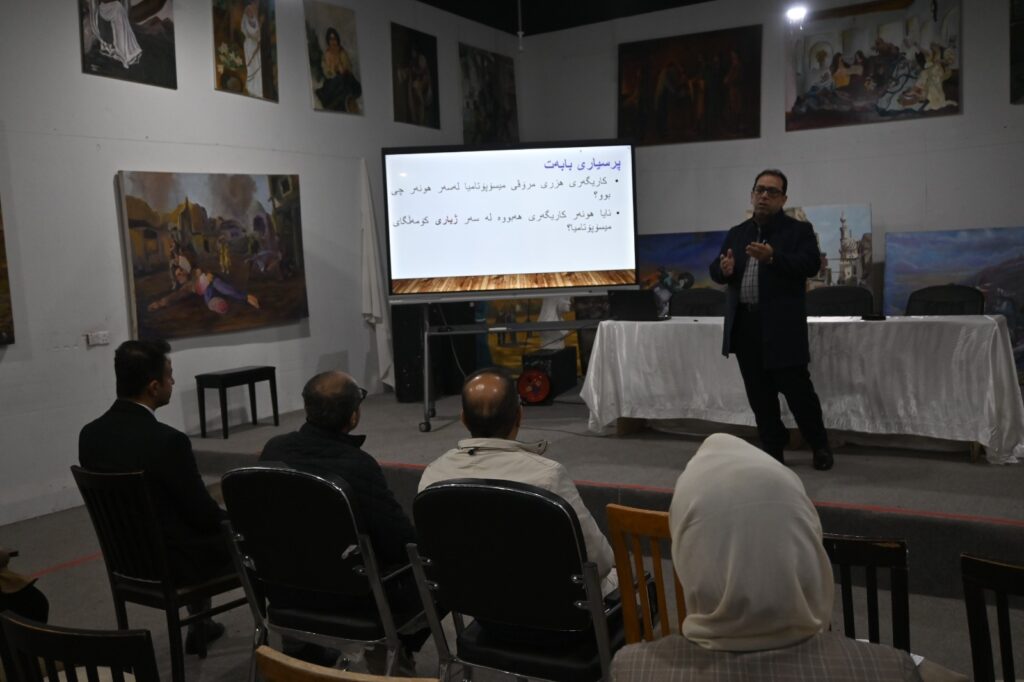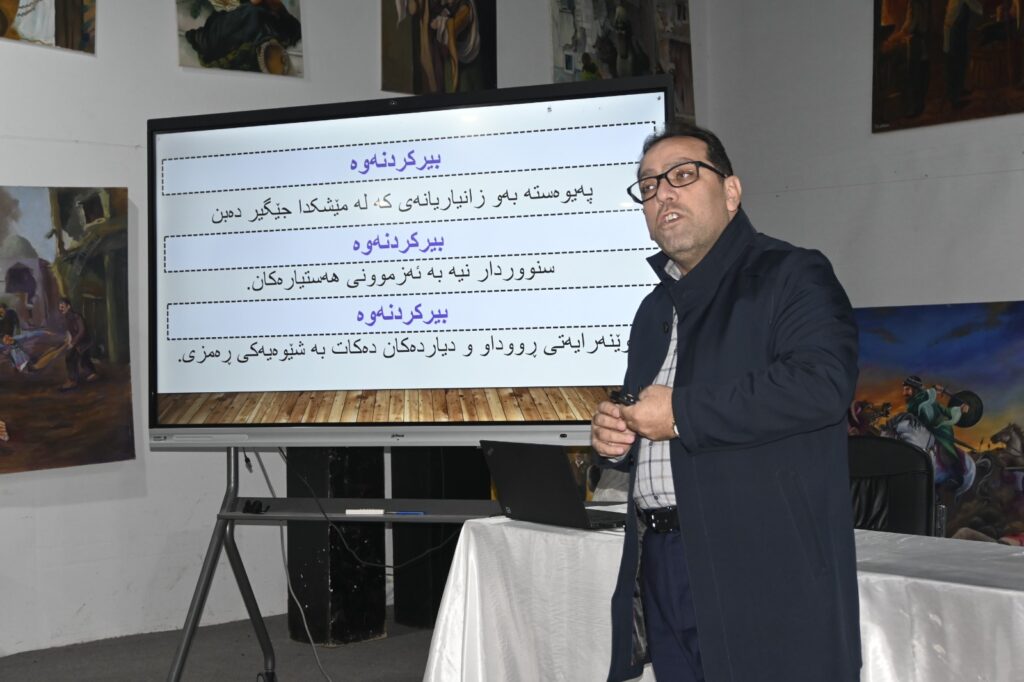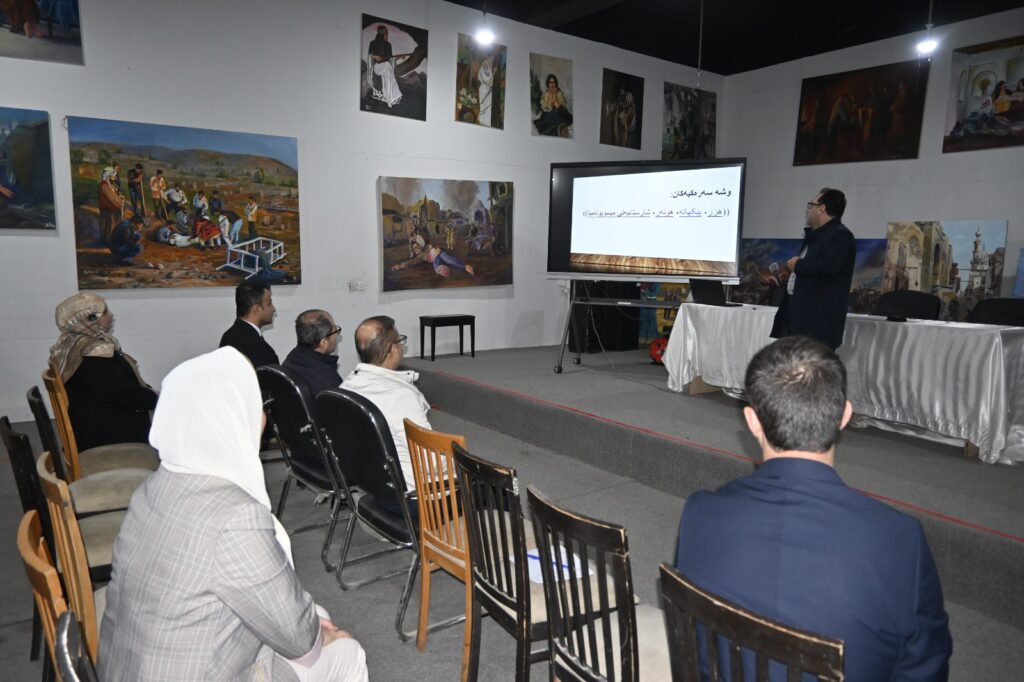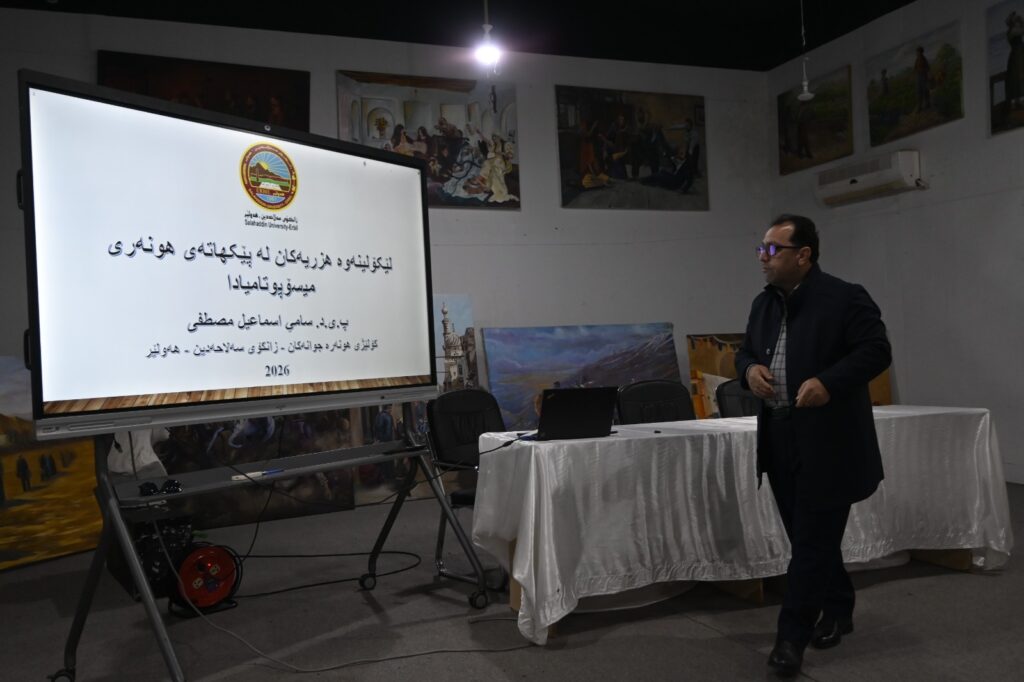
Erbil, Monday (February 23, 2026)
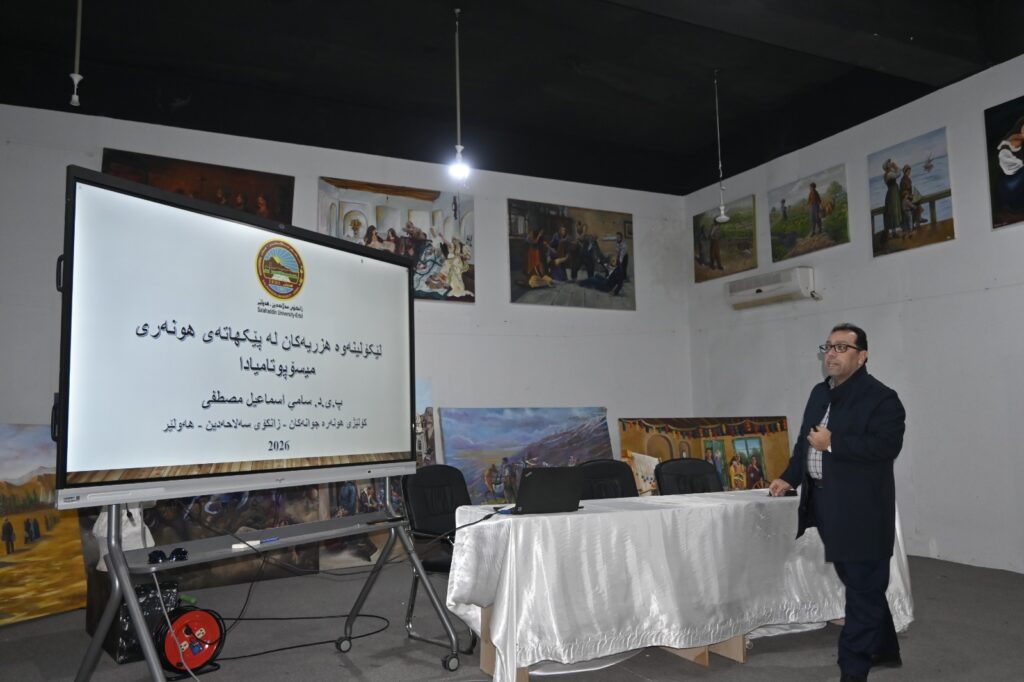
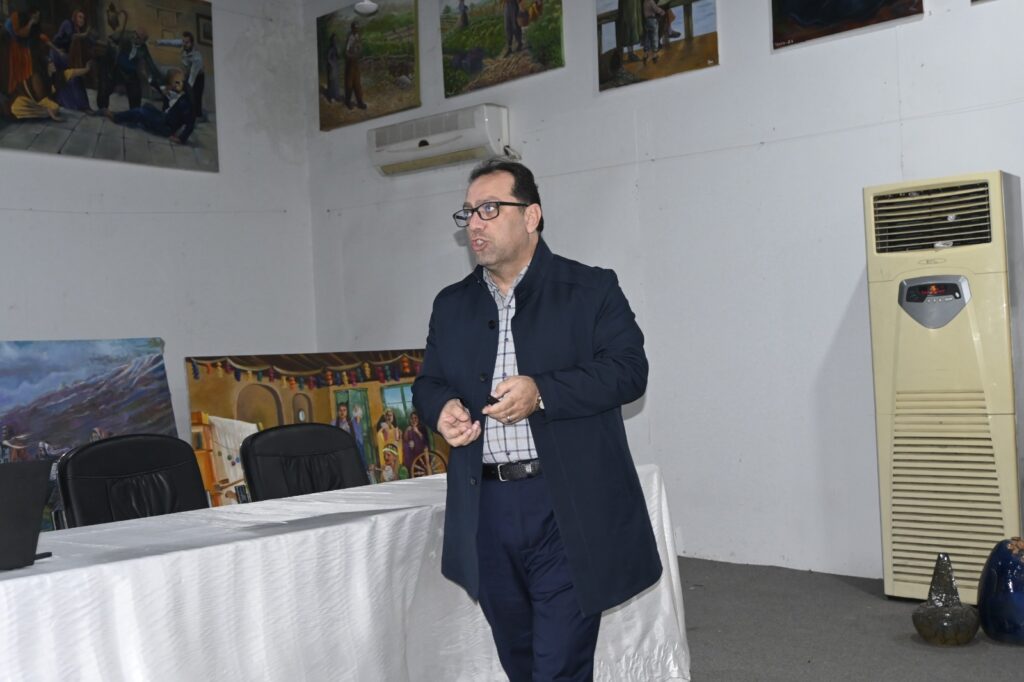
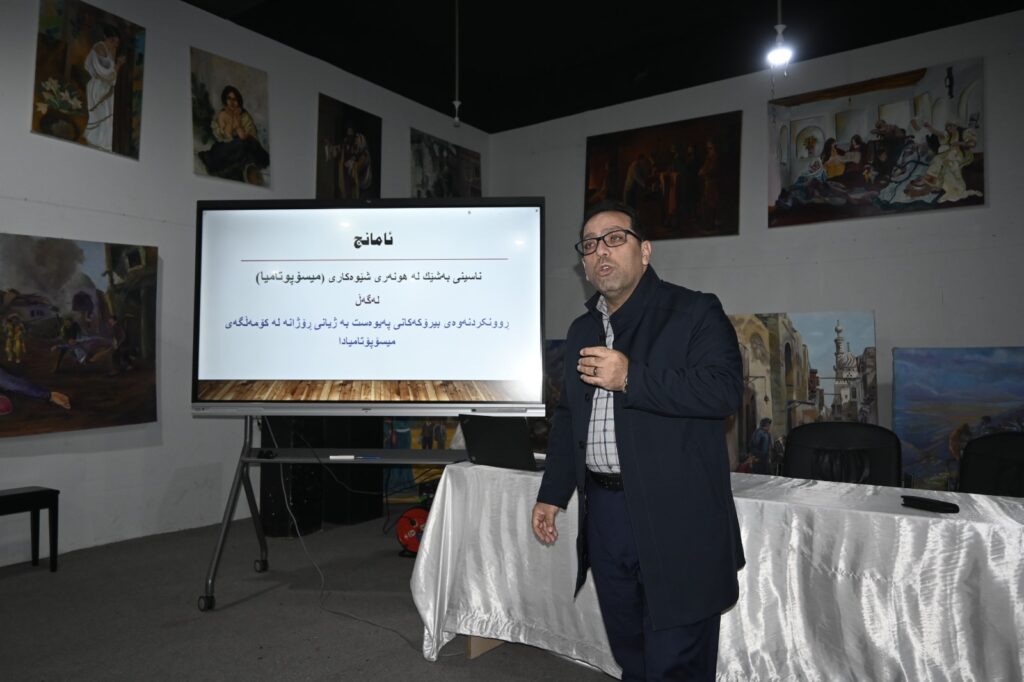
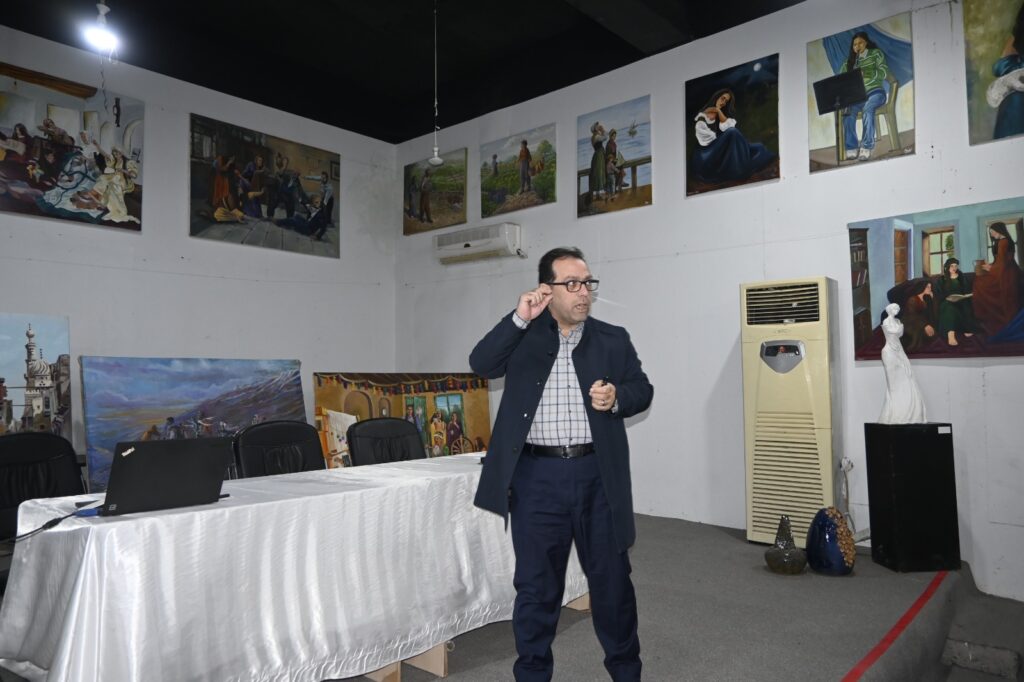
Assist.Prof. Dr. Sami Ismail Mustafa presented his latest intellectual and epistemological perspectives in the field of ancient art and Mesopotamian civilization during a scientific seminar entitled:
“An Intellectual Reading of the Artistic Structure in Mesopotamia.”
The seminar was organized by the Department of Fine Arts at the College of Fine Arts, with the notable attendance of faculty members and students. The session focused in depth on how “thought” functioned in the formation of artistic works, emphasizing that art in Mesopotamia was not merely an imitation of nature, but rather an intellectual expression reflecting the knowledge systems and beliefs embedded in the human mind of that era.
The seminar highlighted how artistic structures in Mesopotamia were closely linked to the symbolic representation of events and phenomena. Through the presentation of archaeological images and examples—such as cylinder seals, the four-faced female sculpture, and the Stele of Ur-Nammu—the transformation process from “idea” to “artistic form” was clarified, along with the impact of this art on the life of society.
This scientific activity aimed to introduce the philosophical foundations underlying Mesopotamian visual formations, stressing that thought is not limited to sensory experience alone, but represents a profound human reflection on daily life and worldview.
At the conclusion of the seminar, participants exchanged observations and discussions regarding the relationship between thought and artistic structure, as well as the historical dimensions of the region’s artistic heritage.