Erbil, Wednesday (May 6, 2026)
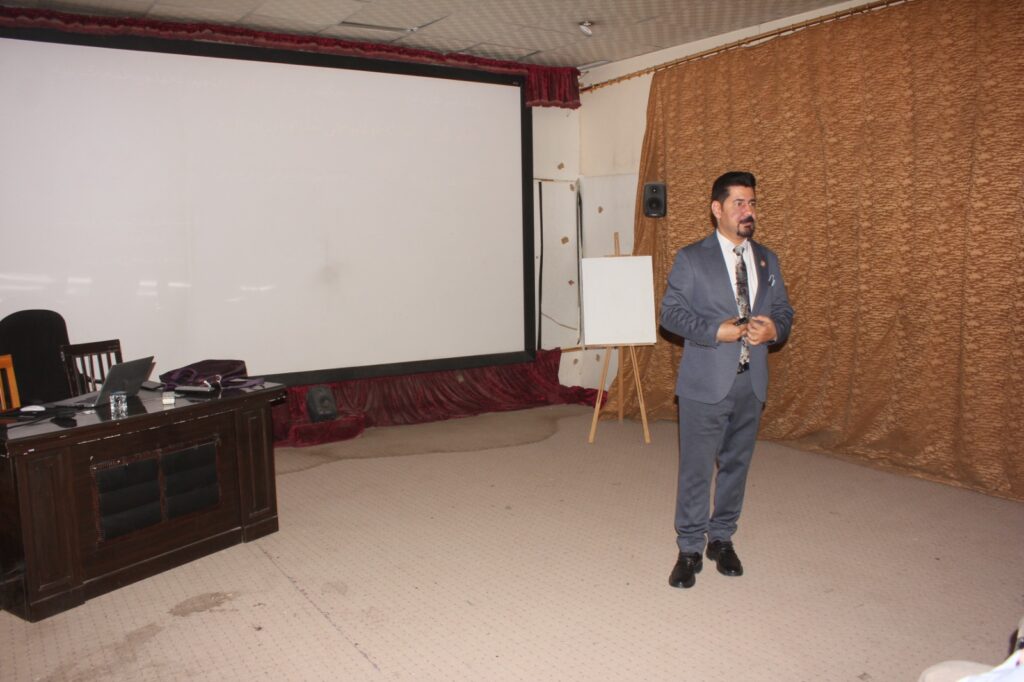
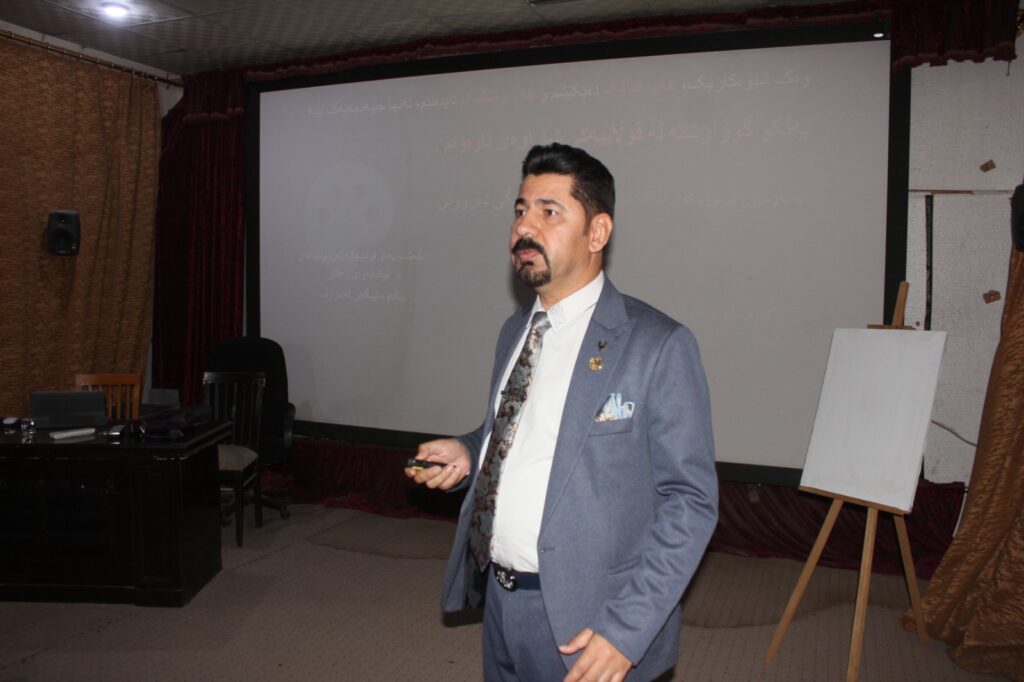
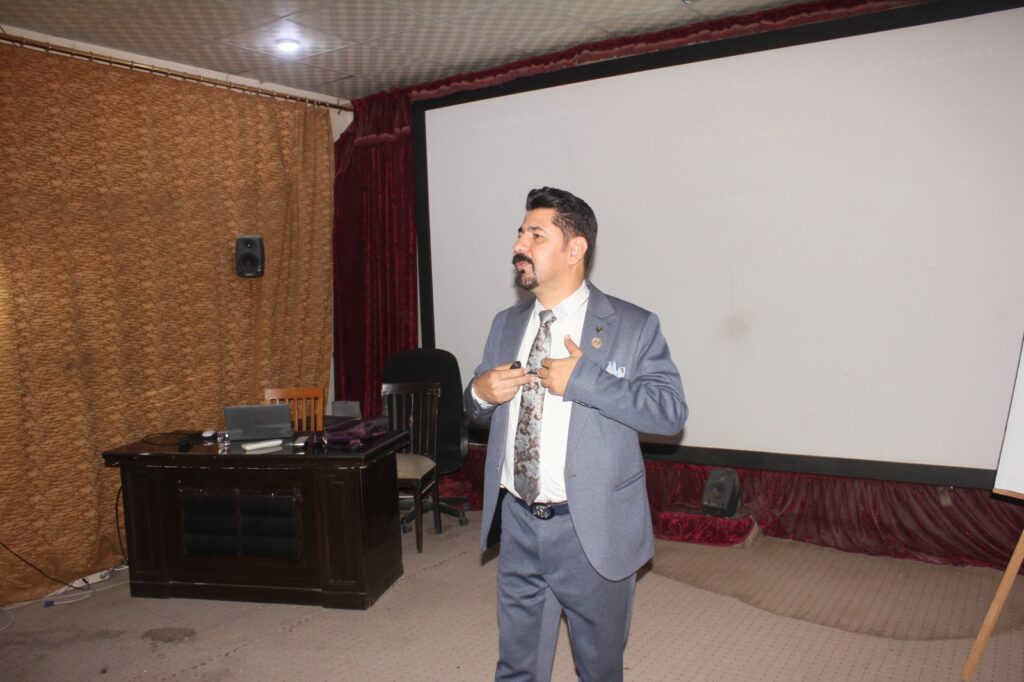
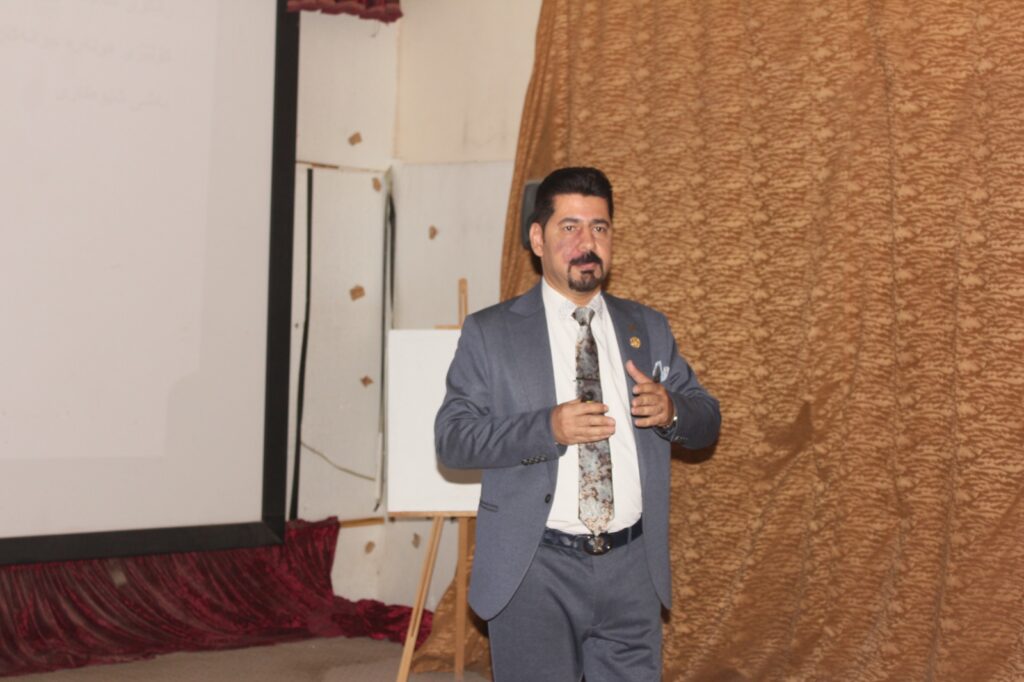
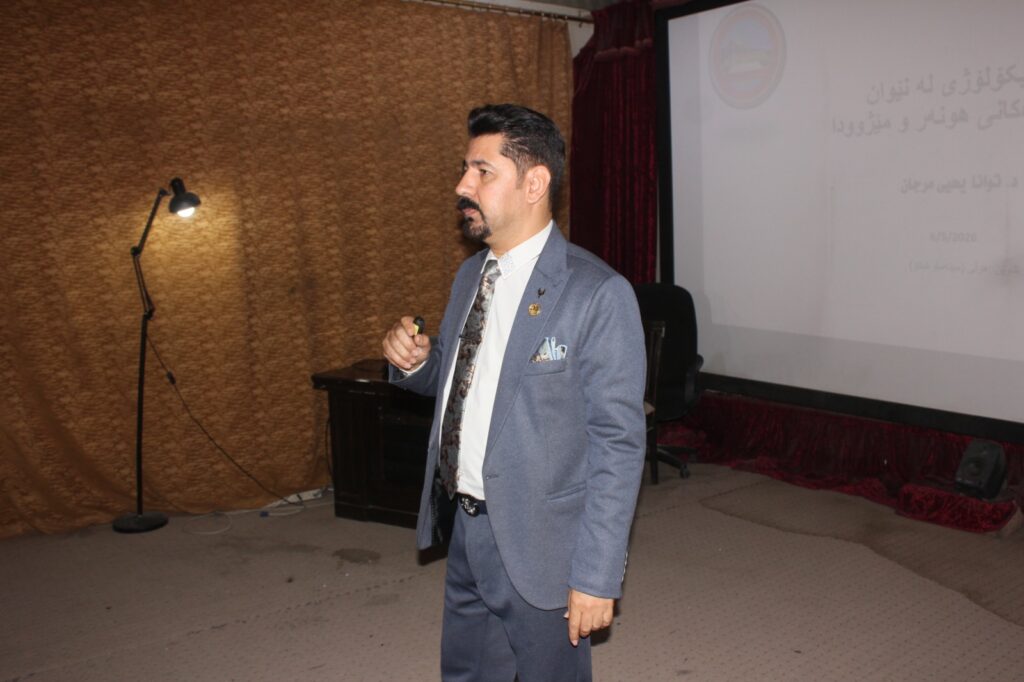
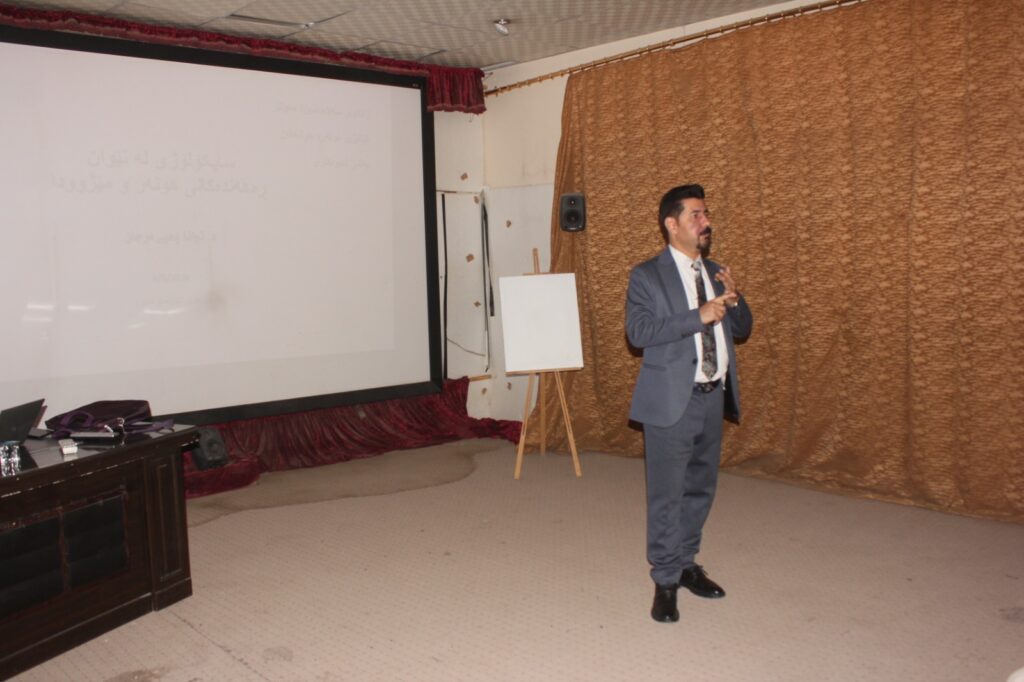
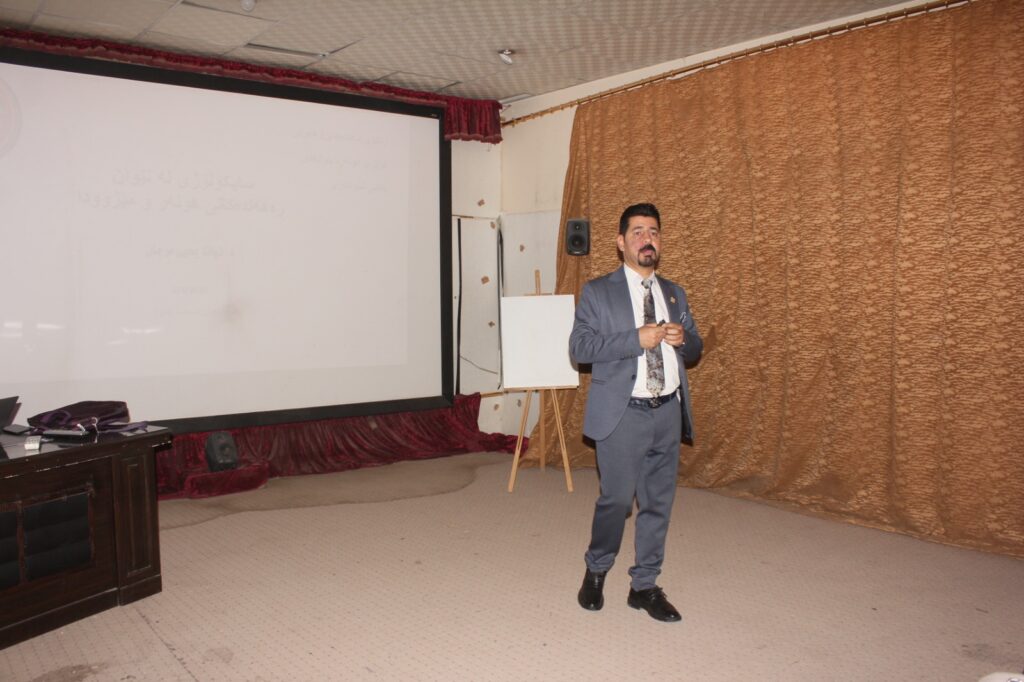
Today, Dr. Twana Yahya Khidr Marjan delivered a scientific seminar entitled “Psychology Between the Dimensions of Art and History”, shedding light on the historical journey of psychology and its profound interaction with the world of visual arts.
During the seminar, it was explained how psychology, for many centuries, existed within the framework of philosophy as a search for the identity of the “soul.” However, the real turning point came when humanity moved from mere “debate” about the mind to “experimentation” on the mind, bringing this field of knowledge into the realm of modern scientific laboratories.
In another part of the seminar, Dr. Yahya Khidr Marjan discussed the role of visual arts, explaining that art has never been merely an act of observation, but rather a visual language for expressing psychological transformations. If philosophy represents reflection on the soul, then art represents its visualization. With the emergence of psychology as an independent science, visual artists gained a deeper understanding of how color, form, and light interact with the human brain and the viewer’s emotions.
The seminar emphasized that a contemporary artwork is not merely a collection of colors, but the result of centuries of philosophical inquiry and scientific discovery. Visual art has evolved beyond the simple transmission of reality into a profound instrument for exploring human feelings and consciousness.
In conclusion, it was highlighted how psychology, nurtured within philosophy, first learned to “question,” but within scientific laboratories, it learned to “observe” and “measure.” This transformation has made art and psychology two inseparable complementary fields in understanding human nature.
Media Office
College of Fine Arts
A Scientific Seminar Highlights the Relationship Between Psychology and the Dimensions of Art and History
Erbil, Wednesday (May 6, 2026)
Today, Dr. Twana Yahya Khidr Marjan delivered a scientific seminar entitled “Psychology Between the Dimensions of Art and History”, shedding light on the historical journey of psychology and its profound interaction with the world of visual arts.
During the seminar, it was explained how psychology, for many centuries, existed within the framework of philosophy as a search for the identity of the “soul.” However, the real turning point came when humanity moved from mere “debate” about the mind to “experimentation” on the mind, bringing this field of knowledge into the realm of modern scientific laboratories.
In another part of the seminar, Dr. Yahya Khidr Marjan discussed the role of visual arts, explaining that art has never been merely an act of observation, but rather a visual language for expressing psychological transformations. If philosophy represents reflection on the soul, then art represents its visualization. With the emergence of psychology as an independent science, visual artists gained a deeper understanding of how color, form, and light interact with the human brain and the viewer’s emotions.
The seminar emphasized that a contemporary artwork is not merely a collection of colors, but the result of centuries of philosophical inquiry and scientific discovery. Visual art has evolved beyond the simple transmission of reality into a profound instrument for exploring human feelings and consciousness.
In conclusion, it was highlighted how psychology, nurtured within philosophy, first learned to “question,” but within scientific laboratories, it learned to “observe” and “measure.” This transformation has made art and psychology two inseparable complementary fields in understanding human nature.