Erbil, Wednesday (May 13, 2026)
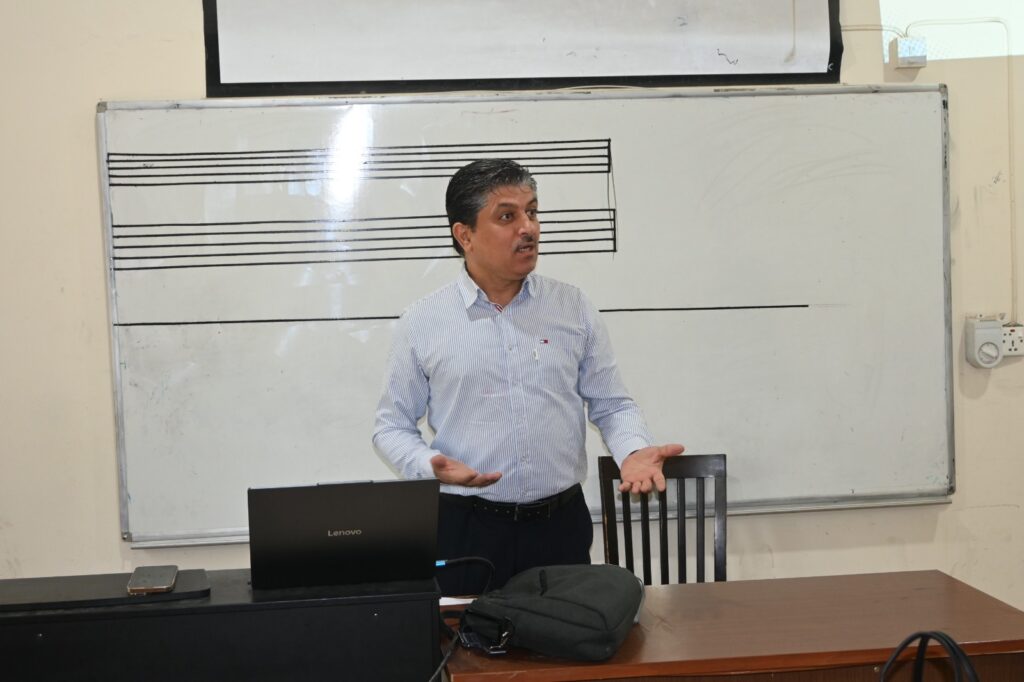
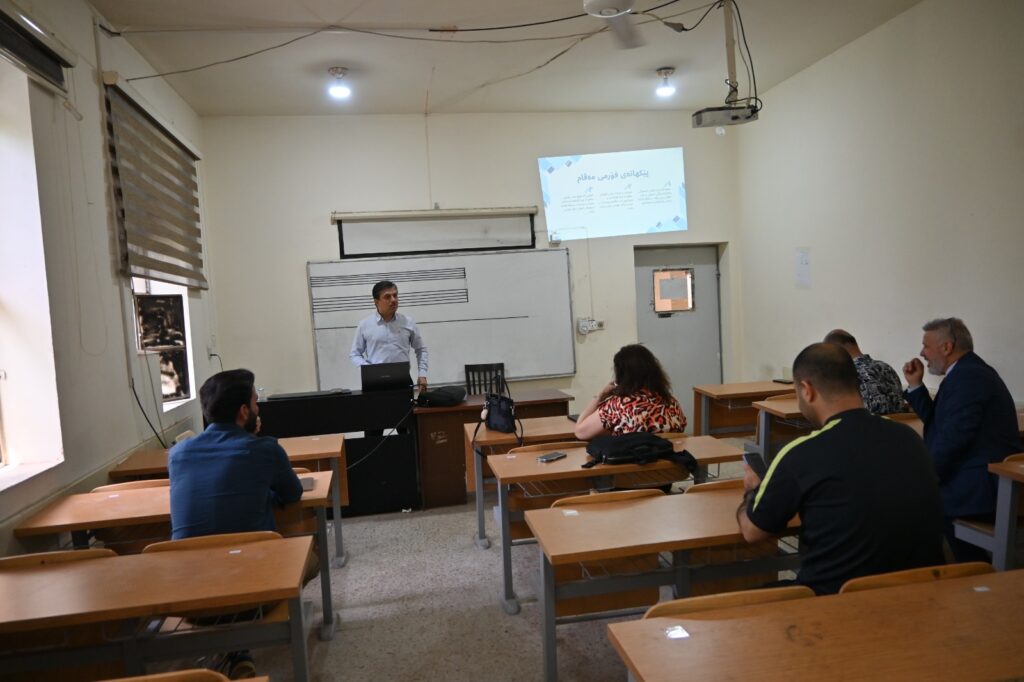
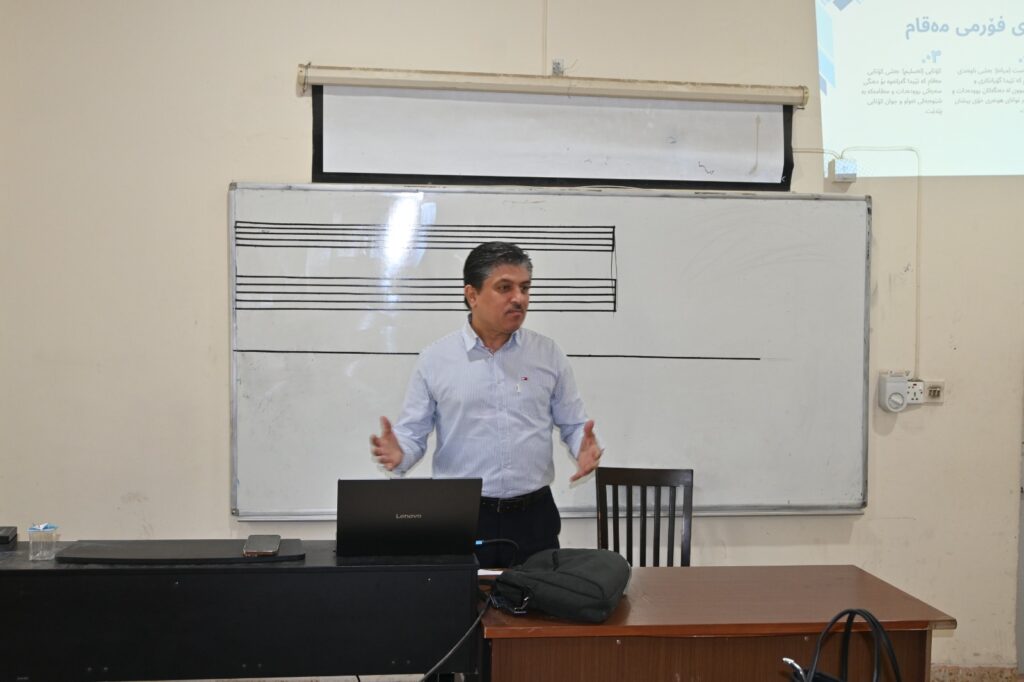
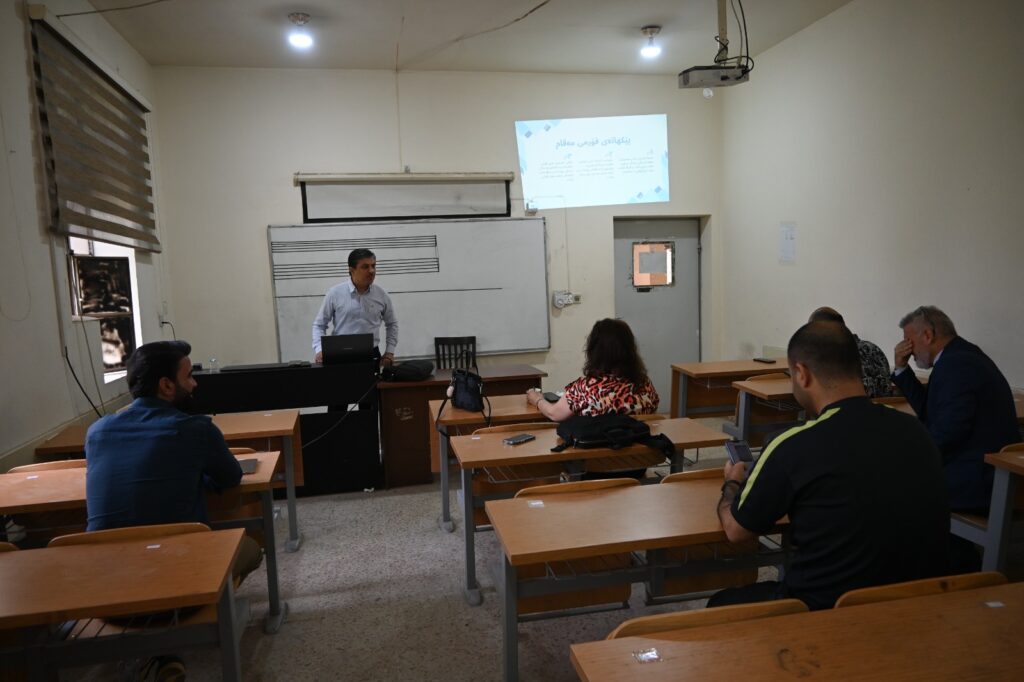
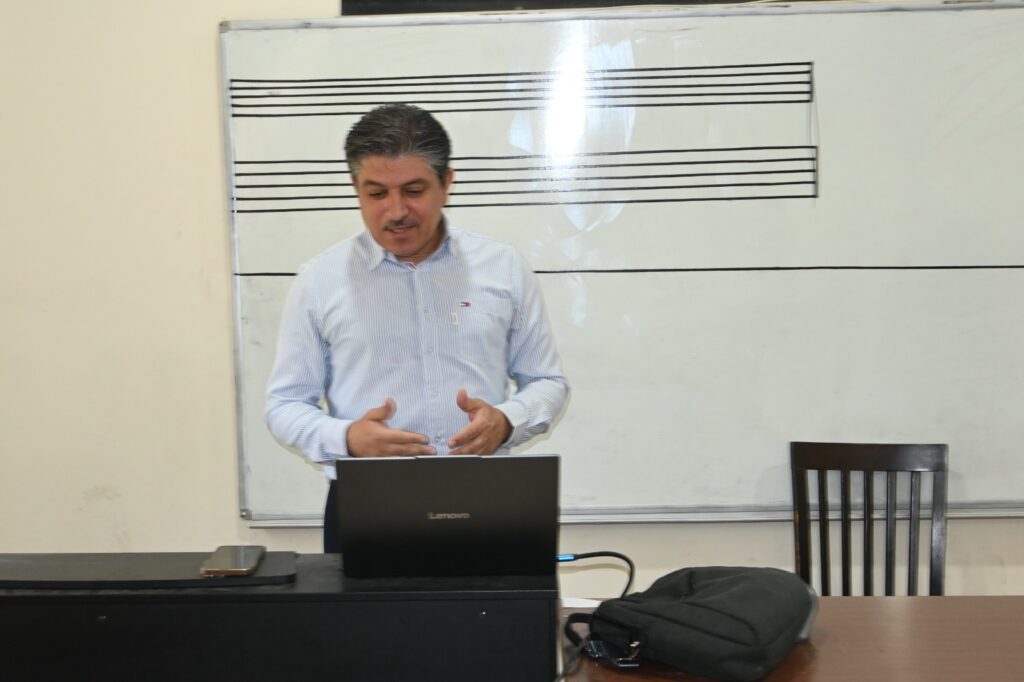
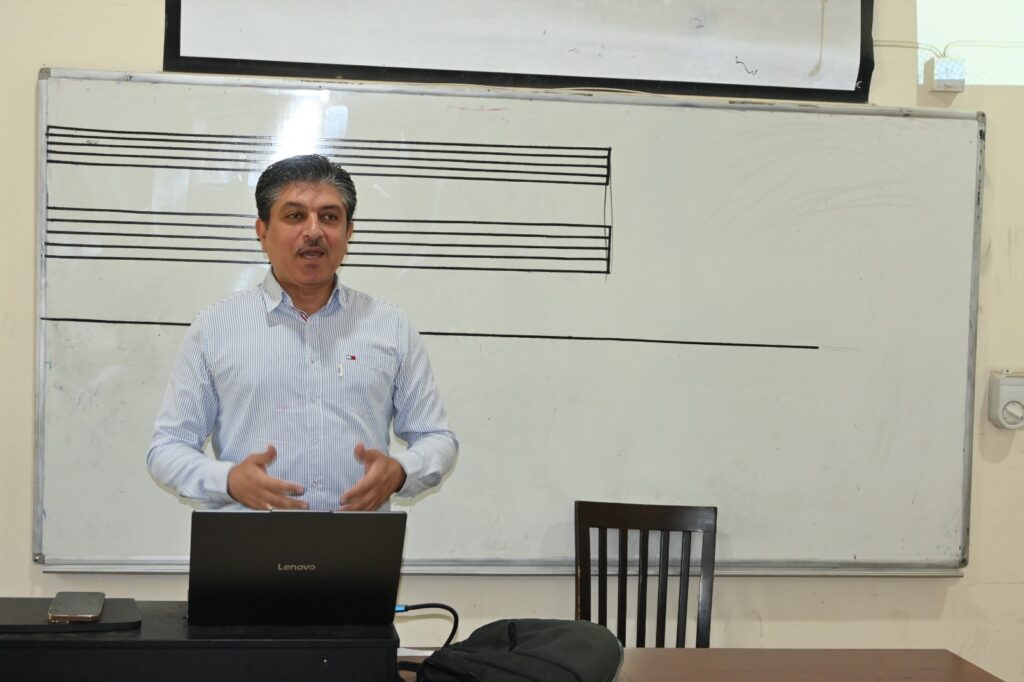
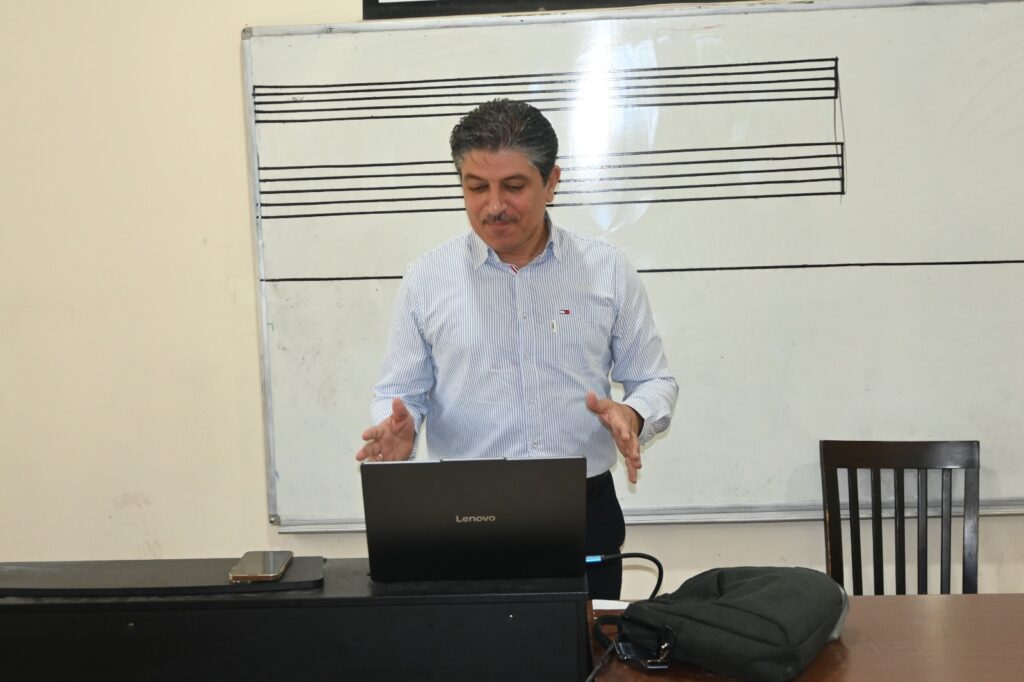
Today, Dr. Sirowan Mohammed Mustafa, a specialist in music science and Western music theory, presented a scientific seminar for the Department of Music at the College of Fine Arts, Salahaddin University, entitled “Diatonic Modulation in Organized Harmony,” highlighting the importance and techniques of key modulation within musical compositions.
During the seminar, it was explained that Western music fundamentally relies on modulation to enrich compositions and provide beauty and diversity. Dr. Sirowan pointed out that in Classical and Romantic music, compositions usually begin and end in the same key, whereas in twentieth-century contemporary music, a piece may begin in one key and conclude in another.
The seminar also discussed in detail the concept of “Closely Related Keys,” in which the difference between two keys involves only one accidental sign (sharp or flat). Another part of the seminar emphasized that moving between a major and minor key on the same tonic degree (such as C major to C minor) is not considered modulation, but rather a change in mode or character, known as “Mode Mixture.”
The seminar further highlighted the important role of the dominant seventh chord (V7) as one of the main tools used in the process of modulation. In conclusion, several practical and visual examples were presented to clarify the relationships between closely related major and minor keys, as well as the methods of applying Diatonic Modulation techniques for the audience.