Erbil, Tuesday (April 28, 2026)
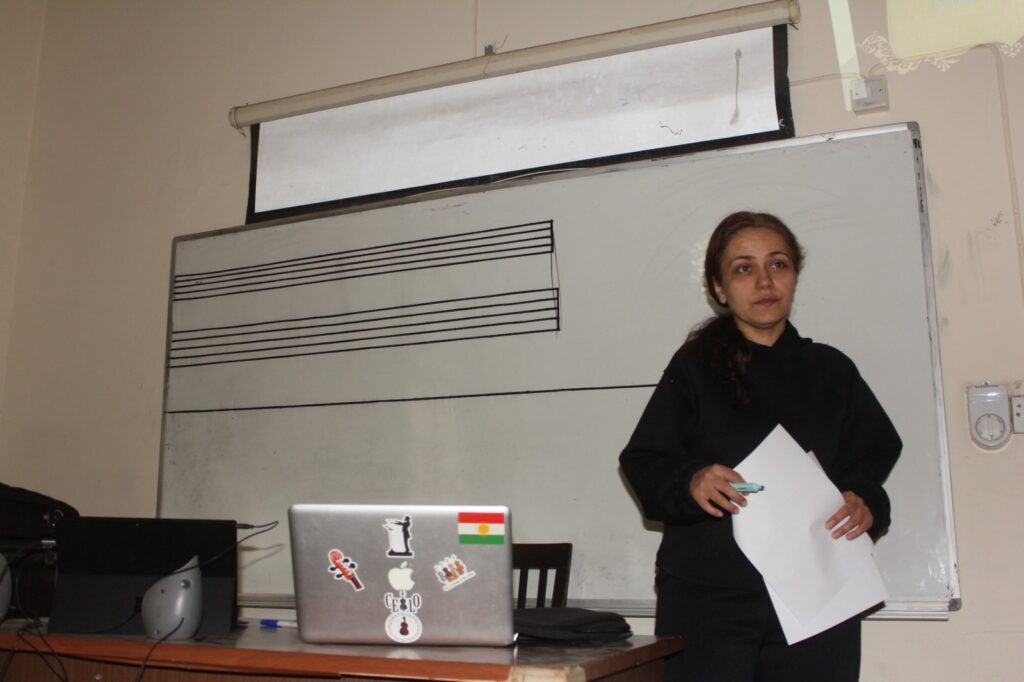
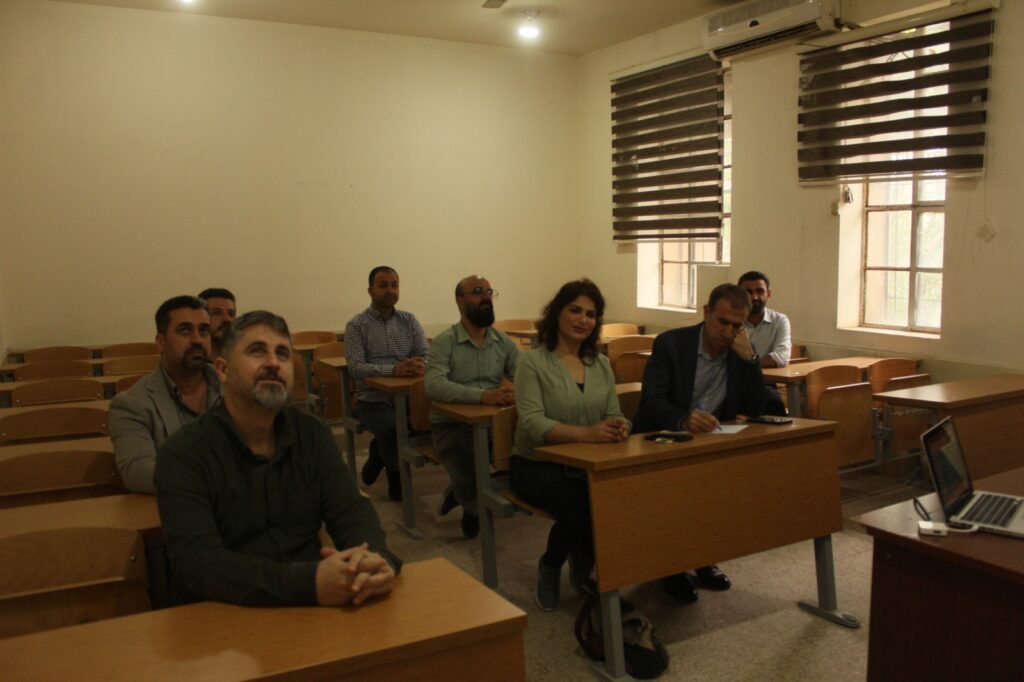
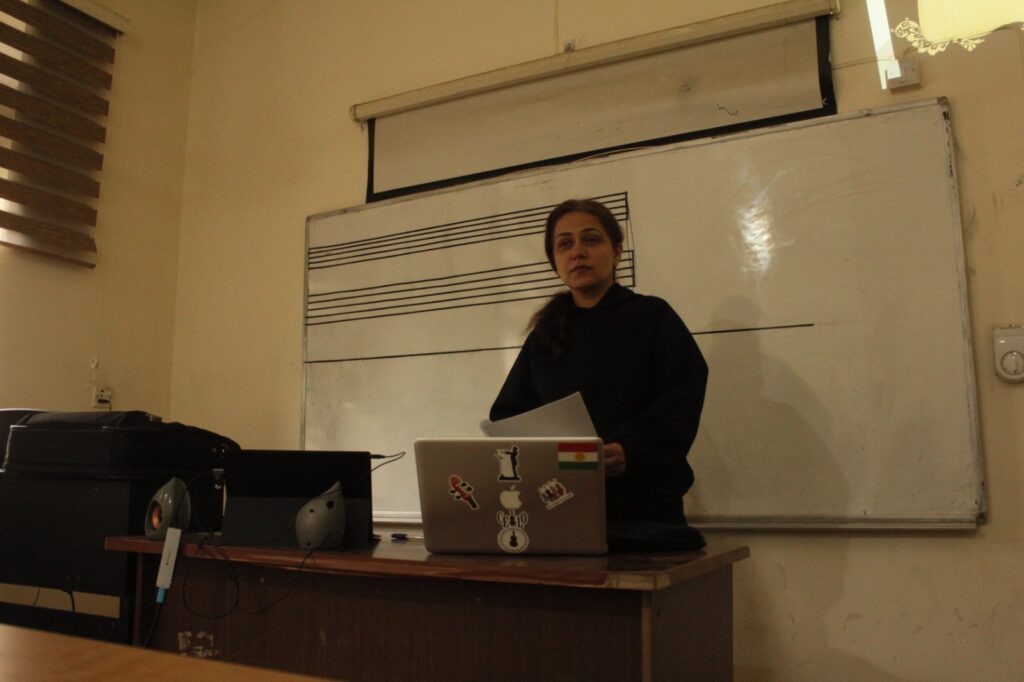
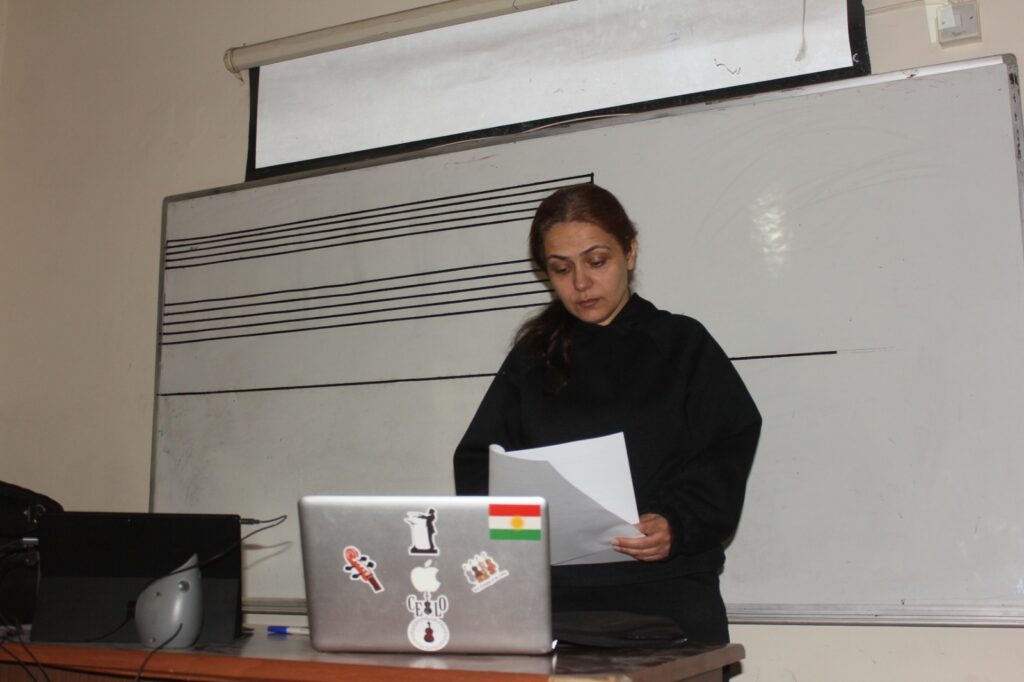
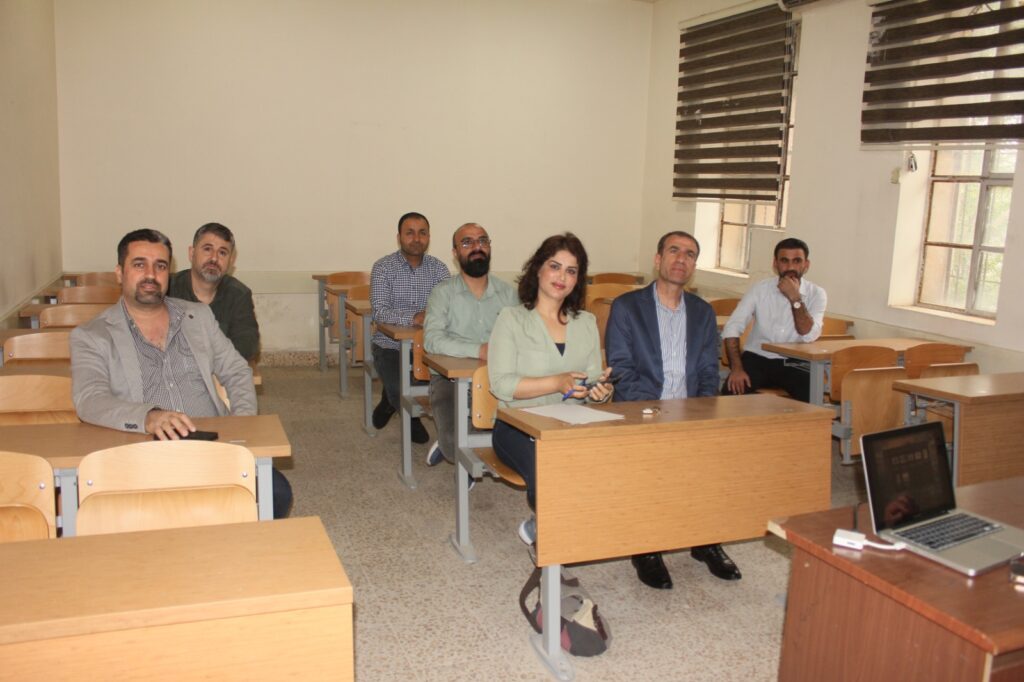
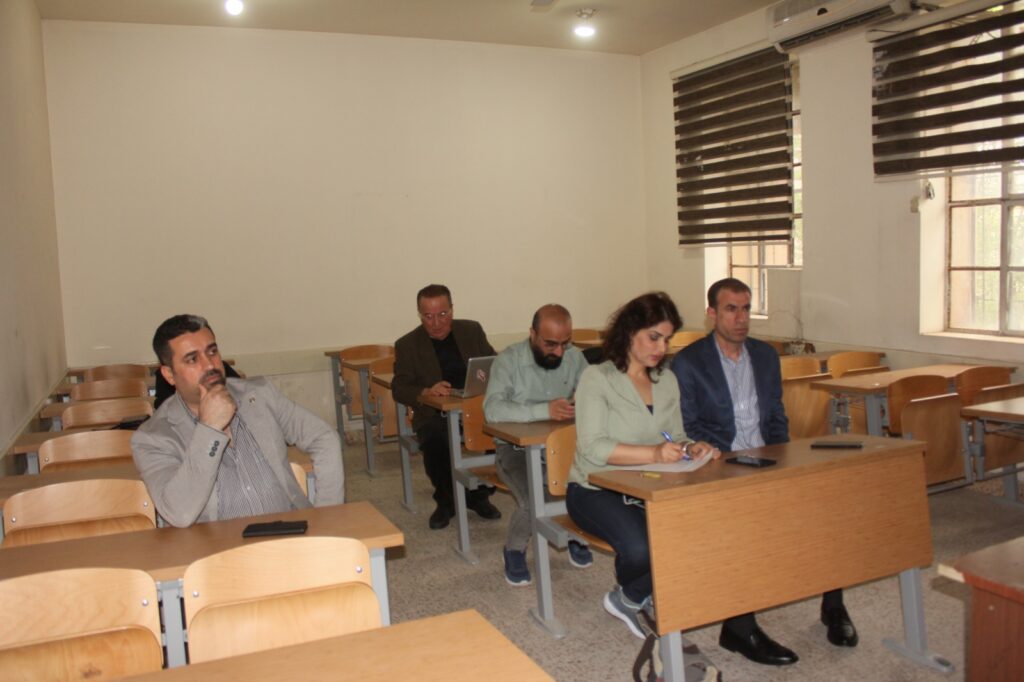
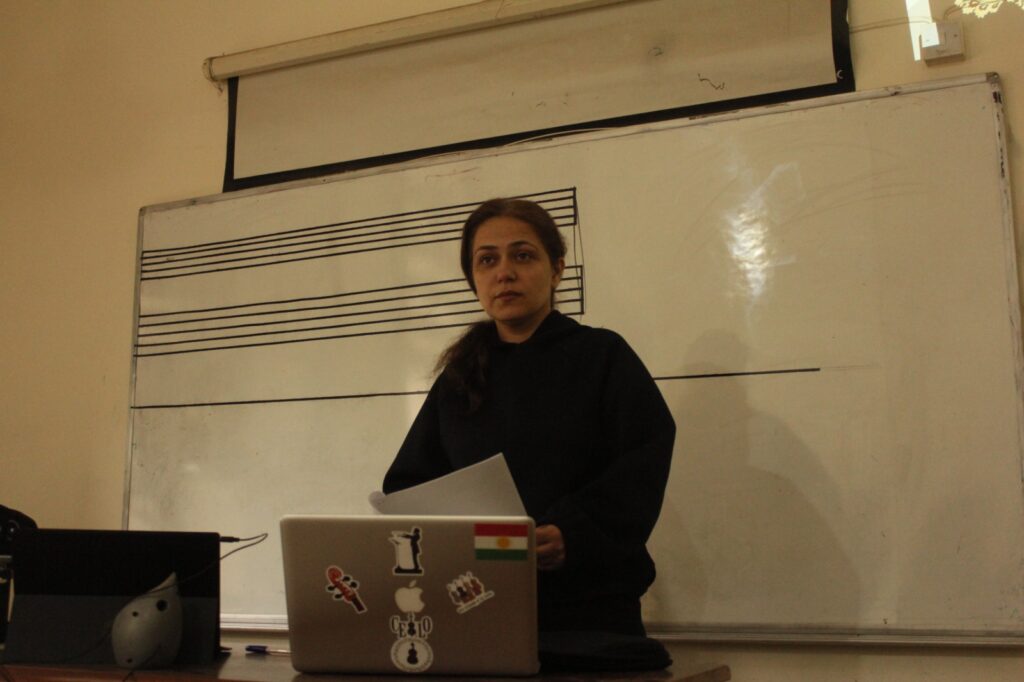
Asst. Lecturer Halz Rashid Mustafa delivered a scientific seminar entitled “The Role of the Flute in the Baroque Era: Johann Sebastian Bach as a Model,” highlighting the technical and philosophical dimensions of the Baroque flute (traverso) and the exceptional role of Johann Sebastian Bach in transforming the status of this instrument in music history.
The seminar provided a detailed discussion of the characteristics of the Baroque flute (traverso), which was traditionally made of ebony or fruitwood and had only a single key. It was explained that because of its delicate and warm tone—closely resembling the human voice—the instrument was regarded by Bach as both a solo and philosophical instrument. Bach succeeded in elevating the flute from an instrument imitating birdsong into a sophisticated medium for counterpoint and musical complexity.
The seminar also shed light on Bach’s immortal masterpieces for the flute, including the Partita in A minor for solo flute, BWV 1013, recognized as one of the earliest historical works written exclusively for solo flute, featuring techniques of implied polyphony. It also discussed the agility and energy of the flute in the Badinerie, as well as its symbolic spiritual and celestial role in orchestral and sacred music.
The seminar emphasized that through his integration of mathematics, emotion, and ornamentation techniques such as trills and appoggiaturas, Bach laid the foundations of classical flute performance. His works remain a “sacred text” for flutists to this day, proving that the flute is capable of performing even the most complex musical forms, such as the fugue.
At the conclusion, the seminar ended with several recommendations, including the need to teach wooden flute performance in music institutes, conduct further research on the “science of breathing” in Bach’s music, and return to original musical scores during performance in order to preserve the authenticity of musical expression.